Ultimate Guide to Choosing the Best MTB Front Suspension for 2025
When it comes to off-road biking, choosing the right MTB front suspension is a critical factor that can greatly influence your riding experience. As we approach 2025, advancements in technology and design have transformed the options available, allowing riders to tailor their bikes to their specific needs and preferences. In this ultimate guide, we will explore the essential features and considerations that will help you select the best MTB front suspension for your adventures.
Understanding the mechanics behind MTB front suspension is paramount for any cyclist looking to enhance their performance. The right suspension can absorb shock, improve control, and enhance overall comfort during rides over rugged terrains. Factors such as travel, damping, weight, and adjustability all play a pivotal role in how your bike interacts with the trails. As new trends emerge each year, staying informed about the latest innovations will ensure that you make a well-rounded decision that complements your riding style.
Whether you are a novice mountain biker or a seasoned pro, navigating the multitude of options can be overwhelming. Our guide aims to simplify the selection process by breaking down the key elements to consider when choosing your MTB front suspension. By the end of this journey, you'll be equipped with the knowledge to make an informed choice that will elevate your mountain biking experience to new heights in 2025 and beyond.
Understanding the Importance of Front Suspension in MTB Riding
In mountain biking (MTB), the front suspension plays a crucial role in enhancing both performance and comfort during rides. A well-designed front suspension system helps absorb shocks from rough terrain, allowing riders to maintain better control and stability.
According to a study from the International Mountain Bicycling Association (IMBA), approximately 70% of all mountain bike accidents are attributed to loss of control due to insufficient suspension. This statistic underscores the importance of investing in a quality front suspension for safer and more enjoyable rides.
Moreover, advancements in front suspension technology have continually improved rider experience. The shift from traditional coil springs to air-based systems has not only reduced weight but also allowed for easier adjustments in terms of compression and rebound settings.
Research published in the Journal of Sports Engineering and Technology indicates that riders equipped with modern front suspension systems can experience up to 30% less impact force compared to those using outdated models.
As the mountain biking community continues to evolve, understanding the significance of front suspension will be vital for both novice and experienced riders seeking to enhance their biking experience in 2025 and beyond.
Key Factors to Consider When Choosing MTB Front Suspension
When selecting the best MTB front suspension for 2025, several key factors come into play. The type of terrain you frequently ride on should guide your choice. Different suspensions are tailored for varying trail conditions, from bumpy, technical descents to smooth, rugged paths. Travel length, typically ranging from 80mm to 150mm, is critical; it determines how much the suspension can compress to absorb shocks. More travel can enhance comfort and control over rough terrains, while less travel may offer a more responsive feel for cross-country riding.
Tips: Consider getting a suspension with adjustable settings to fine-tune your ride according to personal preferences and terrain. This adaptability can make a significant difference, especially when transitioning between different riding conditions.
Another important aspect is the suspension system's design, specifically whether it utilizes a coil or air spring. Coil springs tend to provide a more consistent performance and often have better longevity. On the other hand, air springs can be lighter and can be easily adjusted for firmness, offering versatility for various riders and conditions.
Tips: If possible, test ride different suspension types to see which feels best for your riding style. Personal comfort and responsiveness during rides can greatly influence your performance and enjoyment on the trail.
Types of MTB Front Suspension: Pros and Cons Explained
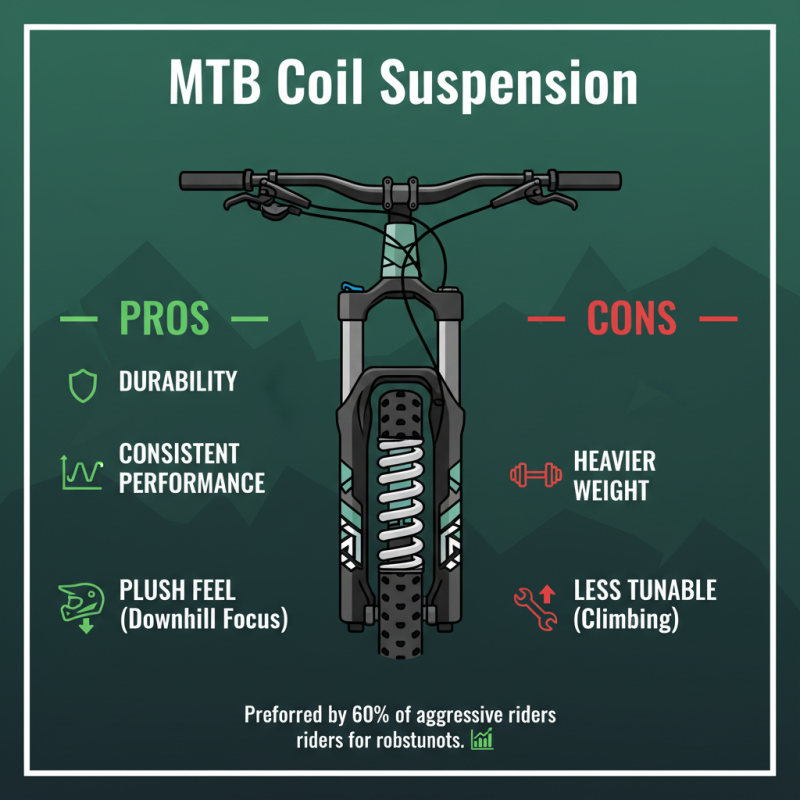
When selecting the best front suspension for a mountain bike, it's crucial to understand the different types available and their respective pros and cons. The two primary categories of MTB front suspension are coil and air suspensions. Coil suspensions are known for their durability and consistent performance across various terrains. They typically provide a plush feel, making them favorable for downhill biking. However, they tend to be heavier and less tunable, which may hinder climbing efficiency. According to industry data, up to 60% of riders prefer coil suspensions for their robustness during aggressive riding conditions.
On the other hand, air suspensions are lighter and offer better adjustability, allowing riders to fine-tune their settings according to their weight and riding style. This versatility makes them popular among cross-country and trail riders. However, air suspensions can be more susceptible to temperature changes, which might affect their performance. A survey from cycling experts indicates that around 70% of competitive riders choose air suspensions for their ability to optimize performance on climbs and technical trails.
Tips: When choosing between coil and air suspension, consider your riding style and the types of terrain you frequent. If you prioritize downhill stability and durability, a coil suspension may be your best bet. Conversely, if you're focused on climbing and versatility, air suspension could be the way to go. Always test different setups to find the one that best meets your needs on the trails!
Evaluating Suspension Travel: What’s Best for Your Riding Style?
When it comes to choosing the right front suspension for your mountain bike (MTB), understanding suspension travel is crucial. Suspension travel refers to the distance the suspension can compress, significantly affecting your bike's performance. Generally, riders can choose between three categories of suspension travel: short (100-120mm), medium (130-160mm), and long (170-200mm). According to the International Mountain Bicycling Association, selecting the right travel can enhance comfort, improve control, and increase safety on rough terrain.
For cross-country (XC) riders, shorter travel suspensions are often preferred. With 100-120mm of travel, these setups allow for better pedaling efficiency and lighter weight, making them ideal for climbs and faster, smoother trails. In contrast, all-mountain and downhill riders typically benefit from longer travel, around 160mm to 200mm, which offers better absorption of larger impacts and enhances traction over rough and technical descents. A study from the Bike Industry Association suggests that 70% of serious trail riders favor medium to long travel setups to cope with the harsher conditions they encounter, demonstrating the importance of aligning suspension choice with riding style and terrain.
Ultimately, the best suspension travel for you will depend on your unique riding style and the environments you ride in. Whether it's a smooth cross-country trail or a rugged downhill path, a well-chosen suspension system can greatly influence your bike's performance, providing you with a more enjoyable and safer ride. Always consider testing different travel lengths on local trails to determine what feels best for your personal riding preferences.
Maintenance Tips for Keeping Your MTB Front Suspension in Top Shape
To maintain the performance and longevity of your mountain bike's front suspension, regular maintenance is crucial. According to a study by the International Mountain Bicycling Association, improper suspension maintenance not only affects ride quality but can significantly compromise the safety of the cyclist, leading to potential accidents on rough terrains. Riders should aim to perform basic maintenance, such as inspecting seals and replacing oil, every 25-30 hours of ride time. Notably, clean suspension internals can help ensure optimal responsiveness and damping, which are essential for absorbing shocks on uneven surfaces.
Additionally, seasonal maintenance is vital for ensuring that your MTB front suspension remains in top shape. The Professional Mountain Bikers’ Association recommends a thorough check-up at least twice a year. This includes examining the bushings and the entire suspension linkage for wear and tear, as issues can often go unnoticed during routine rides. Investing time in this upkeep not only maximizes performance but also extends the lifespan of your components, with some reports indicating that well-maintained suspensions can last up to twice as long as neglected ones. By following these maintenance tips, riders can enjoy a smoother, safer ride and tackle challenging trails with confidence.