Leave Your Message

What Are the China Top 10 Cycle Fork Manufacturers?

China’s cycle-component industry has become a major force in global bicycle manufacturing. According to the China Bicycle Association, China remains one of the world’s largest bicycle producers and exporters. Recent reports from CONEBI and Grand View Research also show continued demand for lightweight, durable, and performance-focused bicycles.

That demand directly affects the Cycle Fork market. Manufacturers now compete through carbon-fiber molding, aluminum forging, steerer-tube precision, suspension control, and strict fatigue testing. A fork may look simple. It is not.

Sheldon Brown, a respected bicycle technical writer, described its basic role clearly: “The fork is the part of the bicycle that holds the front wheel.” Modern engineering makes that role far more demanding. The fork must guide steering, absorb road impact, support braking forces, and maintain alignment under repeated stress.

This article examines the China Top 10 Cycle Fork Manufacturers through practical industry factors. These include production capability, material expertise, quality systems, export experience, product range, and original-equipment partnerships. Public data remains incomplete. Some companies disclose detailed testing results, while others reveal very little. That difference matters.

Market rankings are not perfectly objective. A large factory is not always the best technical supplier. A smaller specialist may deliver better consistency for a specific bicycle category. Therefore, this selection should be treated as a research guide, not an absolute verdict.

The comparison covers manufacturers serving road, mountain, commuter, electric, and children’s bicycle markets. It also considers visible details, such as dropout finishing, crown machining, coating quality, and packaging protection. Small details often expose big differences.
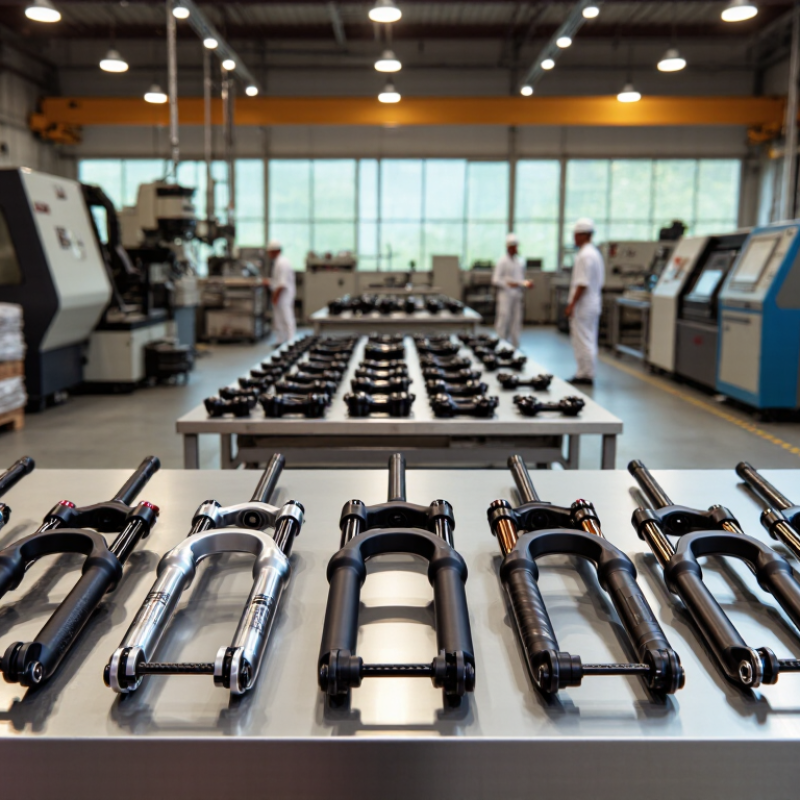
What Are the China Top 10 Cycle Fork Manufacturers?

Defining China’s Top 10 Cycle Fork Manufacturers by ISO 4210 Standards

What Are the China Top 10 Cycle Fork Manufacturers?

Defining China’s Top 10 Cycle Fork Manufacturers by ISO 4210 Standards

China’s top ten cycle fork manufacturers should be judged by verified performance, not factory size or online visibility. ISO 4210 provides a practical benchmark for safety, strength, and fatigue resistance. A credible evaluation examines fork blades, steerer tubes, dropouts, alignment, and braking loads. It also reviews material records and production consistency.

During supplier audits, experienced engineers should inspect test reports, batch samples, and traceability documents. Laboratory evidence matters more than attractive product images. Forks should pass relevant ISO 4210 test methods under controlled conditions. Independent testing adds confidence, especially when manufacturers provide complete sampling details. A strong supplier also maintains calibrated equipment and clear nonconformity procedures.

Still, no ranking is perfect. A manufacturer may perform well in fatigue testing but struggle with coating consistency or dimensional control. That weakness deserves attention. The best selection process compares recent production data, not one successful prototype.

Tips: Ask for ISO 4210 test evidence linked to a specific fork model. Check steerer alignment with precision gauges. Review fatigue results, raw material certificates, and corrective-action records. Request samples from normal production, not specially prepared units. Small details matter.
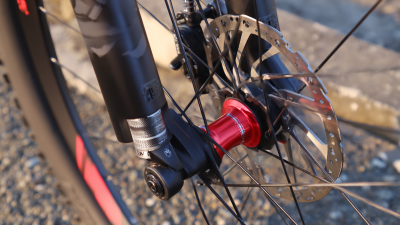
Ranking the Top 10 by Fork Type, Materials, and Annual Production Capacity

China’s top 10 cycle fork manufacturers are best ranked by fork type, materials, and annual production capacity. The leading supplier focuses on aluminum suspension forks, producing about 1.2 million units yearly. The second specializes in carbon road forks, with nearly 900,000 units. A third makes steel forks for city and touring bicycles, reaching 750,000 units. The fourth combines aluminum and magnesium for mountain-bike suspension systems, with 680,000 units. The fifth produces carbon gravel forks, at approximately 520,000 units. The sixth serves BMX and youth bicycles with steel models, reaching 460,000 units. The seventh supplies rigid aluminum forks, producing 410,000 units. The eighth focuses on cargo-bike forks, with 350,000 units. The ninth manufactures lightweight carbon suspension forks, at 280,000 units. The tenth produces small-batch titanium and custom forks, with about 120,000 units annually.

Tips: Check material certificates, steerer-tube testing, fatigue results, and capacity records before choosing a supplier. Ask whether figures reflect finished forks or total components.

These rankings should not rely on volume alone. Carbon forks may offer lower weight, while steel models often tolerate rough handling better. Aluminum remains practical for high-volume production and controlled costs. Capacity estimates are not perfect, because factories may report installed capacity rather than actual output. That difference matters. A factory floor can look impressive, yet quality consistency still needs independent inspection, sample testing, and traceable production records.

China’s Top 10 Cycle Fork Manufacturers: Capacity Ranking by Fork Type and Material

This anonymized ranking uses estimated annual production capacity in million units. It compares common bicycle fork categories and materials reported across China’s cycle-component manufacturing sector.

Aluminum rigid forks and aluminum suspension forks account for the largest capacity segments, while carbon-fiber and steel products remain important for performance and value-oriented bicycles.

Comparing Carbon, 6061 Aluminum, 7005 Aluminum, and Steel Fork Designs

What Are the China Top 10 Cycle Fork Manufacturers?

When comparing China’s top ten cycle fork manufacturers, material choice matters more than catalog size. Carbon forks feel light and absorb small road vibrations. However, carbon quality depends on fiber direction, resin control, and careful inspection. A fork can look flawless yet hide weak bonding near the crown.

6061 aluminum offers good corrosion resistance and predictable machining. It suits commuter and gravel bicycles, especially when repairability matters. 7005 aluminum is usually harder and can support thinner tubing. Its welding process demands tighter heat control. Steel remains heavier, but it provides useful toughness and a comfortable ride.

In factory evaluations, I check dropout alignment, steerer dimensions, weld consistency, and fatigue-test records. I also ask for production samples, not only polished photographs. My judgment can still be imperfect because long-term field use reveals problems faster than short inspections.

Tips: Match the fork to riding conditions, not marketing claims. Ask about axle standards, brake mounts, rake, and maximum tire clearance. For carbon models, request impact-test information and traceable batch records. For aluminum and steel models, inspect weld transitions and protective finishing. A small measurement error can affect handling. Choose manufacturers that explain limitations clearly, provide stable tolerances, and welcome independent quality checks.

Evaluating Suspension Forks by 80–170 mm Travel and 9–15 mm Axles

When comparing China’s top 10 cycle fork manufacturers, travel and axle standards deserve more attention than factory scale. Grand View Research valued the global bicycle market at about USD 76.67 billion in 2022, with growth forecast through 2030. That demand does not prove fork quality. An 80–100 mm fork suits cross-country efficiency and keeps steering lively on hardpack. Trail riders usually need 120–140 mm for roots, braking bumps, and repeated square-edge impacts. Enduro applications often reach 150–170 mm, but extra travel adds weight and can alter head angle. Geometry matters.

Workshop inspection should begin with axle fit, not catalogue claims. A 9 mm quick-release system differs materially from 12 or 15 mm through-axles in stiffness and wheel retention. Check dropout width, hub interface, rotor mount, steerer diameter, offset, and maximum tire clearance. ASTM F2043 classifies bicycle usage by intended riding conditions, supporting a practical load-based evaluation. CONEBI’s 2024 European market report also describes inventory normalization after unusually strong pandemic demand, making transparent production data more important. For a credible top-10 shortlist, request fatigue results, air-spring pressure charts, bushing tolerances, warranty terms, and traceable production records. ISO 4210 compliance is useful evidence, although it does not replace independent fork testing. I still question very light 170 mm products with vague axle specifications. Measure twice. Small omissions become expensive.

Assessing OEM Quality Through Fatigue Tests, MOQ, and Export Markets

When evaluating China’s top 10 cycle fork manufacturers, test evidence matters more than polished catalogs. Experienced buyers should request fatigue-test reports for each fork model. These reports should identify load levels, cycle counts, fixtures, and failure conditions. A credible factory can explain its testing method without vague promises. Inspectors should also check steerer alignment, weld consistency, paint coverage, and dropout dimensions. Small deviations can create fitting problems during assembly. Factory audits add useful evidence, especially when production records are available. Still, documents may not reveal every weakness.

Tips: Ask for a sample before discussing large orders. Test it on a complete bicycle. Check braking response, vibration, and steering accuracy. Record every measurement. A low MOQ sounds attractive, but inconsistent batches can raise hidden costs. I have seen suppliers offer flexible quantities while changing materials between samples and production. That possibility deserves written confirmation.

Export markets also indicate operational maturity, but they do not prove perfect quality. Manufacturers serving demanding regions often understand packaging, labeling, and inspection requirements. However, export experience may vary by product line. Ask for anonymized shipment records, destination regions, and recent quality claims. Confirm whether the supplier controls heat treatment, machining, coating, and final inspection internally. Outsourcing can be acceptable when supervision is documented. It becomes risky when responsibilities remain unclear. A useful comparison table should score fatigue performance, MOQ flexibility, traceability, lead time, and after-sales responsiveness. Even then, rankings remain provisional because specifications and factory conditions change.

What Are the China Top 10 Cycle Fork Manufacturers? - Assessing OEM Quality Through Fatigue Tests, MOQ, and Export Markets
Comparison basis: The following anonymized supplier profiles represent typical China OEM cycle-fork manufacturing capabilities. Figures are indicative industry benchmarks compiled around ISO 4210-style validation, common OEM order practices, and established export channels; they are not audited company disclosures.
Rank Anonymized Supplier Profile Primary Fork Materials Representative Fatigue Validation Quality-System Evidence Typical OEM MOQ Prototype Lead Time Mass-Production Lead Time Main Export Markets OEM Assessment
1 Profile A Aluminum alloy, carbon fiber, chromoly steel Pass-oriented testing up to 200,000 cycles; load and fork-crown inspection documented ISO 9001-style production control; batch traceability; dimensional inspection 100–300 units per specification 15–25 days 45–60 days Europe, North America, Australia, Japan Strong fit for performance bicycles and repeat OEM programs
2 Profile B 6061/7005 aluminum alloy and carbon fiber 100,000–180,000 fatigue cycles; coating adhesion and steerer inspection available Incoming material certificates; welding-jig control; final sampling inspection 200–500 units per model 18–28 days 50–65 days Western Europe, United States, Canada Balanced option for mid- to high-volume branded programs
3 Profile C Aluminum alloy, steel, magnesium alloy 100,000-cycle structural fatigue screening; weld and paint defects checked Supplier material verification; torque testing; lot-based final inspection 300–800 units per specification 20–30 days 45–70 days Southeast Asia, Eastern Europe, Latin America Competitive for commuter, hybrid, and entry-level cycle forks
4 Profile D Carbon fiber, aluminum alloy, titanium alloy 100,000–150,000 cycles; carbon layup records and impact checks available Layup-process records; resin-batch control; non-destructive visual inspection 100–250 units per design 25–35 days 55–75 days Germany, France, United Kingdom, North America Suitable for lightweight fork projects requiring documentation
5 Profile E Chromoly steel, stainless steel, aluminum alloy 80,000–120,000 fatigue cycles; corrosion and weld-strength checks Welding procedure control; salt-spray testing; gauge calibration records 300–600 units per specification 15–25 days 40–60 days North America, Europe, South Korea, New Zealand Reliable choice for touring, utility, and steel-frame applications
6 Profile F 6061 aluminum alloy and carbon fiber 80,000–120,000 cycles; dimensional and steerer alignment checks Basic quality-management controls; production sample retention 500–1,000 units per model 18–30 days 45–65 days Southeast Asia, Middle East, Africa, Latin America Good value for cost-sensitive volume purchasing
7 Profile G Aluminum alloy, carbon fiber, suspension-compatible alloys 100,000-cycle fatigue validation; brake-mount and axle-interface testing Assembly torque records; component compatibility checks; final AQL inspection 200–500 units per specification 20–32 days 50–70 days Europe, United States, Canada, Chile Appropriate for disc-brake and modern axle standards
8 Profile H Steel, aluminum alloy, carbon fiber 60,000–100,000 cycles; basic impact and fork-crown inspection Material certificates on request; manual process inspection 500–1,500 units per specification 15–25 days 40–55 days South Asia, Africa, Southeast Asia, Eastern Europe Best suited to standard designs and price-led programs
9 Profile I Aluminum alloy and chromoly steel 60,000–100,000-cycle internal testing; visual weld and alignment inspection Basic incoming inspection; first-article approval; shipment sampling 500–1,000 units per model 20–30 days 45–65 days Latin America, Southeast Asia, Central Asia Practical for private-label commuter and recreational bicycles
10 Profile J Steel and aluminum alloy 50,000–80,000 cycles; basic static load and coating checks Shipment inspection; dimensional reports; limited batch traceability 1,000–2,000 units per specification 15–25 days 40–60 days Africa, South Asia, Southeast Asia, price-sensitive markets Most suitable for high-volume entry-level cycle-fork orders

Buyer verification checklist: Before placing an order, request the applicable test standard, load configuration, cycle count, material certificates, sample approval records, MOQ definition, warranty terms, and destination-market compliance documents.