Air Fork 24 Tips for Choosing the Best Model for Your Needs?
Choosing the right Air Fork 24 can be a daunting task. With so many options available, you might feel overwhelmed. This guide aims to simplify your decision-making process.
When considering the Air Fork 24, think about your specific needs. Are you a casual rider or a competitive athlete? Each model offers unique features. Explore weight, durability, and adjustability. These factors directly impact your performance.
You may still feel unsure. It’s normal to question your choices. Take time to research and reflect. Your perfect Air Fork 24 is out there. Just remember, the right fit can enhance your biking experience significantly.
Factors to Consider When Choosing an Air Fork for Your Bike
Choosing the right air fork for your bike is crucial. Several factors can influence your decision. Understanding your needs will help narrow down your options. Weight, travel length, and damping systems are vital considerations.
When assessing weight, remember that lighter forks can improve handling but may compromise durability. It's a balancing act. Travel length affects ride comfort and terrain adaptability. Longer travel is better for rough trails, while shorter travel suits smooth roads well.
Damping systems vary widely. Many riders prefer adjustable options for versatility. Some forks have a lockout feature, which is useful for climbing. You need to think about your riding style. Are you going fast downhill or taking it easy on flat paths? This choice impacts fork performance significantly.
Don't overlook the aspect of compatibility. Not every fork suits every bike. Make sure to check your frame's specifications. It can be frustrating to find the perfect fork, only to realize it doesn't fit. Take your time. Sometimes, you may need to test a few before finding the right match.
Understanding Different Types of Air Fork Technologies Available
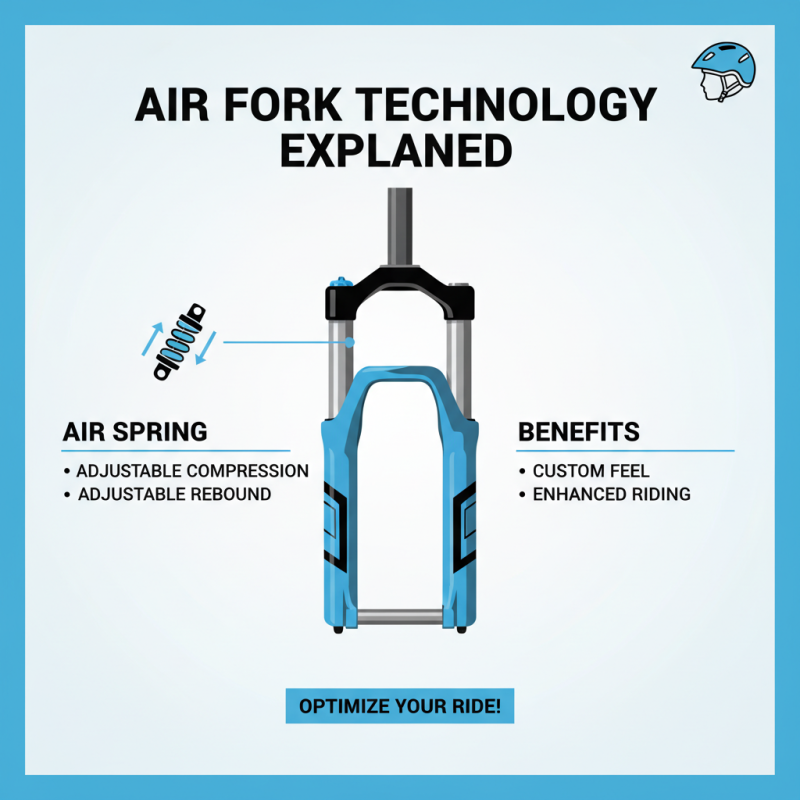
When choosing an air fork, it's vital to understand the different technologies available. There are various types, each suited for specific riding styles and preferences. For instance, air springs provide adjustable compression and rebound, allowing for a custom feel. This adaptability can enhance your riding experience, making them popular among cyclists.
Consider the type of riding you enjoy. If you favor downhill or aggressive trails, look for forks that feature a robust design with adjustable air pressure. Lighter riders might benefit from models that offer plushness over stiffness. The key is finding a balance that suits your weight and riding style.
Tip: Test multiple models before purchasing. Sometimes the numbers don’t tell the full story. Another tip: consult online reviews or forums. They can provide insights from real users, which is often more helpful than specs alone. You might also reflect on what feels right. A fork’s performance can be subjective; your comfort and confidence are paramount.
Key Specifications: Travel, Weight, and Adjustability Explained
Choosing the right air fork can be challenging. Key specifications like travel, weight, and adjustability play crucial roles. Travel refers to how much suspension movement you have. More travel means better performance on rough trails. However, it can also make the bike feel sluggish on smoother terrain. Striking a balance is vital. Riders need to consider where they will ride the most.
Weight is another critical factor. A lighter fork enhances bike handling and rider control. But lighter models may compromise durability. Some riders prefer the sturdiness of a heavier fork. This choice can affect overall riding experience, especially during long rides. It's worth pondering how often you ride and the conditions you face.
Adjustability offers flexibility. Some forks provide settings for different terrains. This can enhance the riding experience. Yet, too many options can overwhelm. Riders often choose a less adjustable model for simplicity. Take time to reflect on your needs. Each specification influences your ride. Choosing the right air fork requires careful thought and understanding.
Air Fork 24 Tips for Choosing the Best Model for Your Needs
| Model |
Travel (mm) |
Weight (g) |
Adjustability |
| Model A |
100 |
1800 |
Yes |
| Model B |
120 |
1900 |
No |
| Model C |
130 |
1700 |
Yes |
| Model D |
150 |
2000 |
Yes |
| Model E |
140 |
1800 |
No |
Comparative Analysis of Popular Air Fork Brands and Models
When selecting an air fork, consider multiple factors. Different models boast unique features. Some prioritize weight, while others focus on durability. Look for options with adjustable air pressure. This can significantly enhance your riding experience. Tuning your air fork to match your style is essential.
It's crucial to compare brands. Some may excel in performance, while others focus on affordability. Prices can vary greatly. Make sure to read user reviews. They often reveal issues that specifications don't cover. For instance, some forks might feel stiff on rough terrain. Others may not provide adequate response during descents.
Testing different models can be enlightening. A personal trial helps identify comfort and feel. Can you ride smoothly? Is there feedback from the fork? These questions matter. Remember, a good air fork should enhance your ride, not hinder it. An informed choice can lead to a more enjoyable, memorable biking experience.
Expert Recommendations on Maintenance and Performance Optimization
When it comes to air forks, maintaining optimal performance is crucial. A standard practice is to regularly check the air pressure. This ensures proper suspension response and helps in preventing potential damage. Don't overlook the importance of cleaning your fork regularly. Dirt and grime can lead to decreased performance.
Consider these tips for better maintenance. Adjust the air pressure according to your weight and terrain. The right setting can drastically improve ride quality. Pay attention to rebound settings. A slow rebound can cause harshness on descents. You might want to experiment.
Always inspect seals for wear. Damaged seals can lead to air leakage and decrease performance. Regularly changing the oil can make a noticeable difference. It keeps the fork smooth and responsive. Lastly, remember that tuning takes time. Sometimes, you might not get it right on the first try. Adjust and learn.
Air Fork Model Performance Comparison